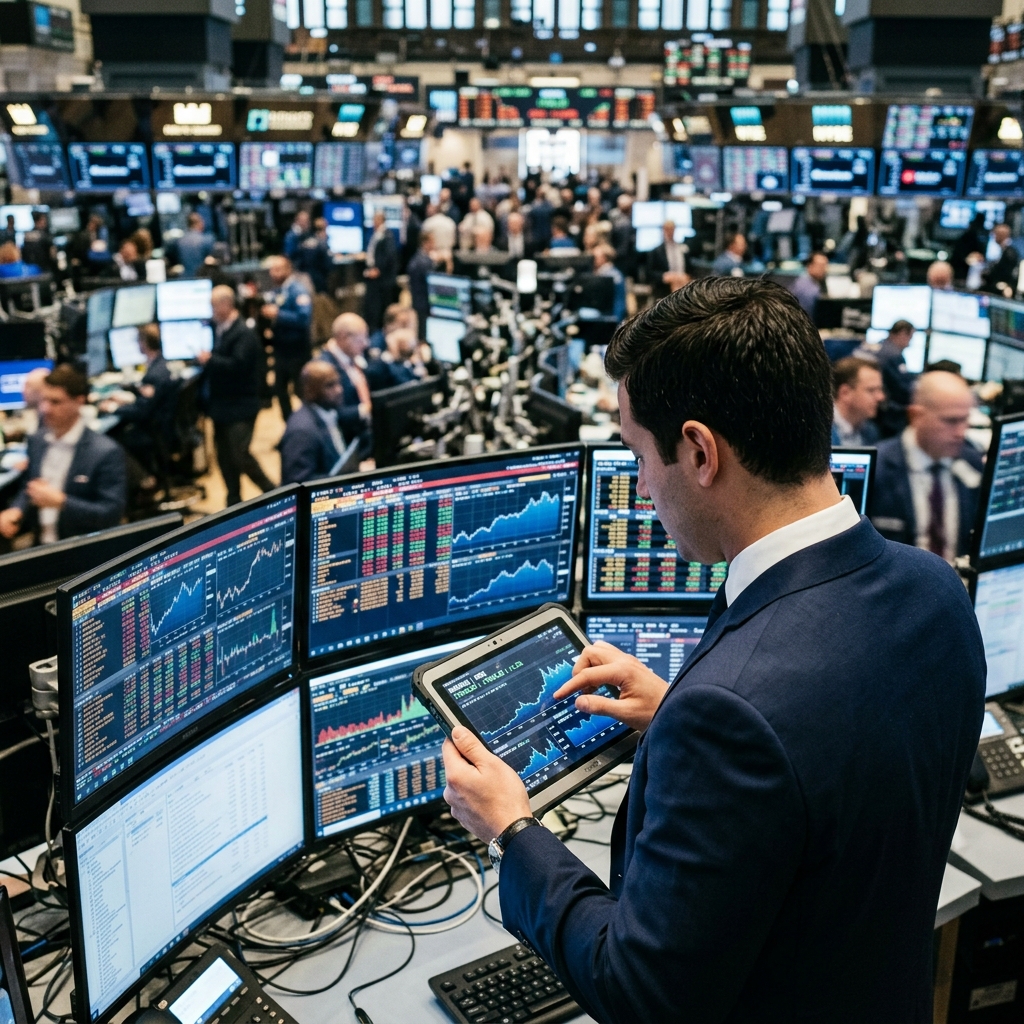
The FTMO Challenge represents a significant hurdle for many traders aiming to secure funded capital. While manual trading requires immense discipline and emotional control, automated strategies offer a different path, leveraging systematic execution and potentially higher consistency. Passing the FTMO Challenge with an Expert Advisor (EA) is entirely feasible, provided the strategy is robust, well-tested, and specifically configured to respect the firm's stringent rules.
Understanding FTMO's Core Rules
Before deploying any automated strategy, a deep understanding of FTMO's rules is non-negotiable. Your EA must inherently manage these constraints, or you risk immediate failure. The primary rules are:
- Profit Target: A specific percentage (e.g., 10% in Phase 1) that must be reached within a set timeframe.
- Maximum Daily Loss: A hard limit on the equity loss within a single trading day (e.g., 5% of initial balance). The EA must cease trading or significantly reduce risk if approaching this.
- Maximum Total Drawdown: A cumulative loss limit (e.g., 10% of initial balance). This is critical; the EA must never violate this.
- Minimum Trading Days: A requirement to trade for a minimum number of days, ensuring the strategy isn't a fluke. Your EA needs to generate trades over this period.
An effective automated strategy for FTMO isn't just about making profit; it's about making controlled profit within these boundaries.
Why Automated Strategies for FTMO?
Automated systems offer several distinct advantages that align well with the FTMO Challenge's structure:
- Emotional Detachment: EAs execute trades based purely on predefined logic, eliminating human emotions like fear, greed, or frustration that often lead to rule breaches or irrational decisions.
- Consistency: A well-programmed EA provides consistent entry, exit, and risk management parameters, which is vital for meeting targets without violating drawdown rules.
- Speed and Efficiency: EAs can analyze market conditions and execute trades faster than a human, potentially capturing opportunities or reacting to changes more promptly.
- Backtesting and Optimization: Automated strategies can be rigorously backtested over historical data to prove their profitability and robustness, and optimized to fit FTMO's specific conditions.
Developing and Optimizing Your Expert Advisor
The choice between developing a custom EA or using a commercial one depends on your technical skills and specific strategic needs. Regardless, the focus should be on robustness and adaptability.
Strategy Selection and Development
Not all strategies are suitable. High-frequency trading or extremely aggressive scalping EAs might struggle with typical broker spreads, latency, or FTMO's platform environment. Focus on strategies that:
- Have a clear edge over various market conditions.
- Can be tested over long historical periods (5-10 years).
- Are adaptable to different currency pairs or instruments offered by FTMO.
- Can integrate sophisticated risk management.
When developing, prioritize clear entry/exit logic, stop-loss, and take-profit mechanisms.
Rigorous Backtesting and Forward Testing
This is perhaps the most critical phase. Backtesting involves running your EA on historical data to simulate past performance. However, be wary of curve-fitting, where an EA performs exceptionally well on past data but fails in live markets because it's too tailored to specific historical anomalies.
- High-Quality Data: Use tick data with real variable spreads for the most accurate backtests, ideally matching the broker type FTMO uses.
- Out-of-Sample Testing: Always test your optimized EA on data it hasn't seen during the optimization process.
- Stress Testing: Simulate extreme market conditions or periods of high volatility to see how the EA handles stress.
- Demo Account Forward Testing: Before ever deploying to an FTMO Challenge account, run the EA on a demo account that closely mimics FTMO's trading conditions for several weeks or months. This is your real-world sanity check.
Integrating Risk Management within the EA
This is where an EA truly earns its keep for prop firm challenges. Manual oversight is prone to error; the EA must manage risk intrinsically.
Daily Loss and Max Drawdown Management
Your EA needs an internal mechanism to track current daily profit/loss and total drawdown. If the daily loss approaches the FTMO limit, the EA should:
- Close all open trades.
- Cease opening new trades for the remainder of the trading day.
- Notify the user.
Similarly, if the total drawdown limit is approached, the EA must take even more drastic measures, potentially halting trading until manual intervention or specific conditions are met.
Position Sizing and Stop Losses
Employ dynamic position sizing based on available equity and predefined risk per trade. For example, risk 0.5% or 1% of equity per trade. Every trade must have a hard stop-loss. An EA without a stop-loss is a direct path to violating drawdown rules.
Operational Considerations for the FTMO Challenge
Even with a perfect EA, deployment requires careful attention.
- VPS (Virtual Private Server): A reliable VPS is essential to ensure your EA runs 24/7 without interruption, regardless of your local internet or power. Choose a VPS provider with low latency to FTMO's servers.
- Broker Conditions: While FTMO uses specific liquidity providers, their execution and spreads can vary. Your EA needs to be robust enough to handle these variations without significant performance degradation.
- News Filtering: High-impact news events can lead to unpredictable market movements, wider spreads, and slippage. Consider incorporating a news filter into your EA that pauses trading around major economic releases, or manually intervene during these periods.
- Monitoring: "Automated" doesn't mean "unsupervised." Regularly monitor your EA's performance, open trades, and account equity. Look for unexpected behavior, error messages, or disconnections. Be prepared to pause or shut down the EA if conditions change drastically or if it's performing outside expectations.
Conclusion
Passing the FTMO Challenge with an automated strategy offers a powerful advantage through disciplined, systematic execution. However, success hinges on meticulous preparation: a robust, well-backtested EA, stringent integration of FTMO's risk rules, and vigilant monitoring. It's not a shortcut, but rather a strategic application of technology to navigate a demanding trading environment.
Continue Reading