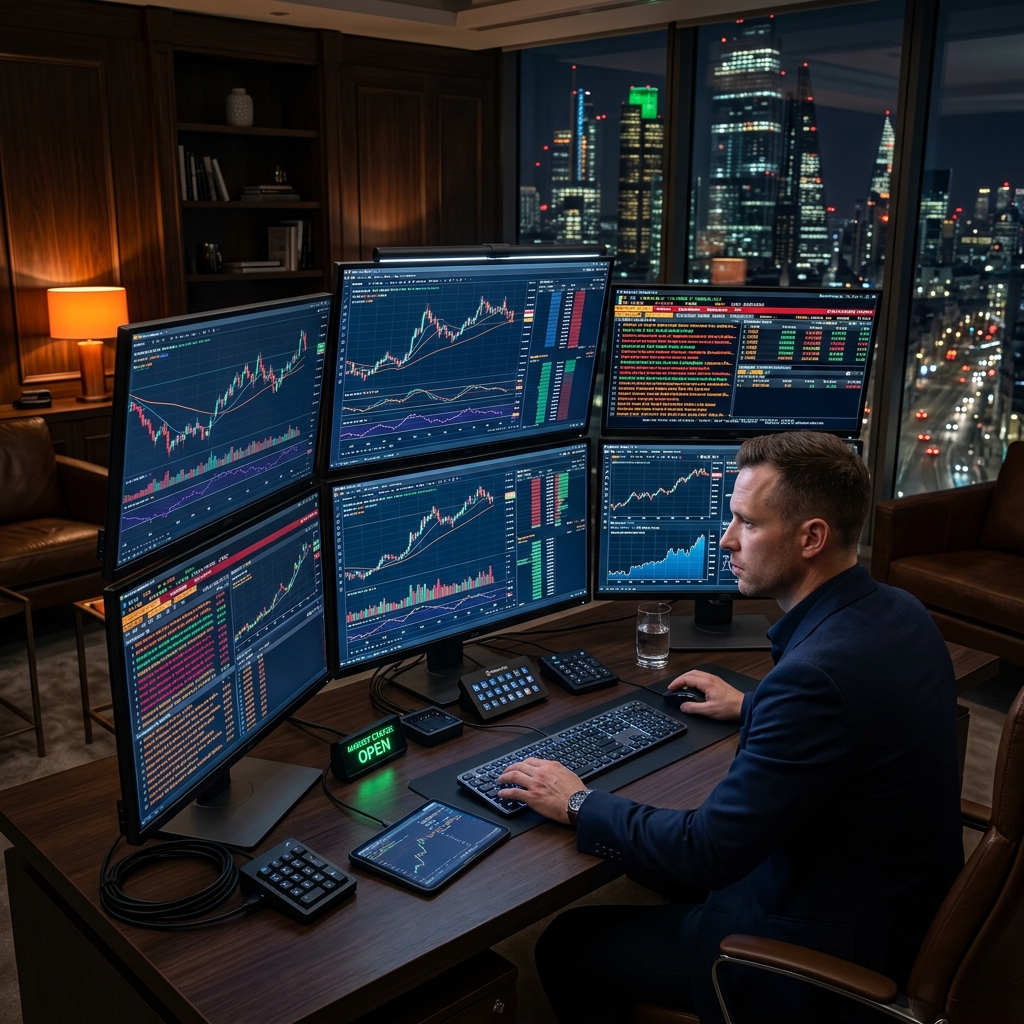
The Non-Farm Payrolls (NFP) release is perhaps the most anticipated economic data point in the Forex calendar. For automated traders, it represents both immense opportunity and significant peril. The massive volatility and liquidity shifts around NFP announcement times can lead to substantial slippage, eroding potential profits or amplifying losses. While completely eliminating slippage during such events is largely unrealistic, a strategic, multi-faceted approach can significantly mitigate its impact and improve the reliability of your automated trading operations.
Understanding the Slippage Predicament During NFP
Slippage occurs when an order is executed at a different price than intended. During NFP, this phenomenon is exacerbated due to several interconnected factors:
- Extreme Volatility: Prices can move dozens or even hundreds of pips in milliseconds.
- Liquidity Gaps: Market makers and liquidity providers often pull back their bids and offers just before and during the immediate aftermath of the announcement, leading to wider spreads and shallower order books.
- Latency: The time it takes for your order to reach the broker's server and then the liquidity provider can mean the price has already moved significantly.
- Broker Execution Models: Dealing desk brokers might requote or widen spreads aggressively. Even ECN/STP brokers can struggle with execution speeds when liquidity evaporates.
The Goal: Mitigation, Not Eradication
It's crucial to set realistic expectations. The concept of "no slippage" during NFP is largely a myth, especially for retail traders. The objective should be to minimize slippage to an acceptable degree, ensuring your automated strategy can still operate profitably over time, even with inherent execution uncertainties. This requires a combination of technical sophistication, careful broker selection, and intelligent strategy design.
Practical Strategies for Minimizing NFP Slippage in Automated Trading
1. The Right Broker Makes a Difference
Your choice of broker is paramount. Not all ECN/STP brokers are created equal, especially when it comes to high-impact news events.
- Deep Liquidity Pools: Look for brokers with direct access to multiple Tier-1 liquidity providers. Deeper pools mean more available counterparties and better chances of filling your order close to the intended price.
- Execution Speed: Inquire about their average execution times, particularly during volatile periods. Some brokers boast sub-millisecond execution.
- Server Infrastructure: Brokers with robust, low-latency servers, ideally co-located with major liquidity providers, offer a significant advantage.
- NFP-Specific Policies: Some brokers have explicit policies regarding NFP trading, such as temporarily widening spreads or increasing margin requirements. Understand these beforehand.
2. Strategic Order Type Implementation
While market orders are common for speed, they are highly susceptible to slippage. Advanced order types require careful consideration.
- Limit Orders: A limit order guarantees your price but not execution. During NFP, the market might blast past your limit without filling it, leaving your strategy out of the move. They are useful for strategies that aim to fade extreme moves or catch specific price levels if volatility momentarily reduces.
- Stop-Limit Orders: These combine a stop price (triggering a limit order) with a limit price. The risk here is similar to a pure limit order: the market may blow past both your stop and limit prices, leaving your order unfilled.
- One-Cancels-Other (OCO) Orders: While not directly preventing slippage, OCOs can be part of a broader strategy. For example, placing a buy stop and a sell stop simultaneously, with one cancelling the other upon execution. The market order component of the activated leg will still be subject to slippage.
Operational Decision: Many automated NFP strategies are forced to use market orders to ensure entry, accepting slippage as a cost of doing business. The key then becomes mitigating how much slippage occurs.
3. Latency Optimization: Every Millisecond Counts
Network latency is a silent killer of NFP strategies.
- Virtual Private Servers (VPS): Hosting your Expert Advisor (EA) on a low-latency VPS physically located close to your broker's server is non-negotiable. Services like BeeksFX or FXVM specialize in this.
- Direct Fiber Connections: For institutional players, direct fiber connections offer the ultimate latency advantage, but this is typically beyond retail reach.
- Efficient Code: Ensure your EA's code is optimized, minimizing unnecessary calculations or data requests that could add processing delay.
4. Position Sizing and Liquidity Constraints
Attempting to execute a very large order during NFP can exacerbate slippage. If your position size exceeds the available liquidity at your desired price level, your order will be filled across multiple price points, leading to significant average slippage.
- Scale Down: Consider reducing your typical position size for NFP trades.
- Order Fragmentation: Advanced EAs can be designed to fragment large orders into smaller chunks, though this adds complexity and may not always be effective if liquidity is truly scarce.
5. Strategic Timing: Pre-Event vs. Post-Event
- Pre-Event Entries: Trying to enter trades milliseconds before the news based on a prediction is extremely risky and often subject to massive slippage as prices gap.
- Post-Event Execution: A more robust automated approach often involves waiting for the initial volatility spike to subside, or for specific price action patterns to confirm direction after the news. This might mean missing the absolute peak of the move, but it significantly reduces slippage risk.
- Volatility Filters: Program your EA to delay entry until the Average True Range (ATR) or a similar volatility indicator drops below a certain threshold.
- Price Confirmation: Implement logic that requires a certain number of candles to close in a particular direction or for price to clear significant support/resistance after the news, before an entry is triggered.
6. Dynamic Spread Monitoring
During NFP, spreads can widen from fractions of a pip to several pips in an instant. An EA can be programmed to monitor the current spread and refuse to execute an order if the spread exceeds a predefined maximum threshold. This ensures you're not entering trades with an immediate, significant disadvantage.
Technical Implementation and Robustness
Building EAs for NFP requires a higher degree of robustness.
- Error Handling: Your code must gracefully handle execution errors, requotes, and connection issues.
- Re-entry Logic: What happens if an order isn't filled? Does the EA retry, or wait for the next opportunity?
- Backtesting Limitations: Traditional backtesting on historical tick data often struggles to accurately simulate NFP conditions, as the real-time liquidity and slippage dynamics are incredibly complex. Forward testing on a demo account during actual NFP releases is invaluable.
Realistic Expectations and Risk Management
Even with the most sophisticated setup, NFP trading remains high-risk.
- Capital Allocation: Only risk capital you can afford to lose.
- Stop Loss Placement: While aiming to minimize slippage, always account for the possibility of stops being hit with significant slippage. Use wider stops than usual if trading the immediate aftermath, or avoid stops entirely for very short-term, high-frequency strategies (with extreme caution).
- Monitoring: Even automated systems benefit from human oversight, especially during such critical events.
Conclusion
Automating NFP trading without slippage is an ambitious goal, best reframed as minimizing and managing slippage. It demands a holistic approach: meticulous broker selection, intelligent order management, aggressive latency optimization, prudent position sizing, and robust EA design incorporating strategic timing and dynamic market condition checks. By focusing on these practical elements, traders can significantly improve their chances of navigating NFP volatility more effectively, transforming a notoriously risky event into a more manageable automated opportunity.
Continue Reading