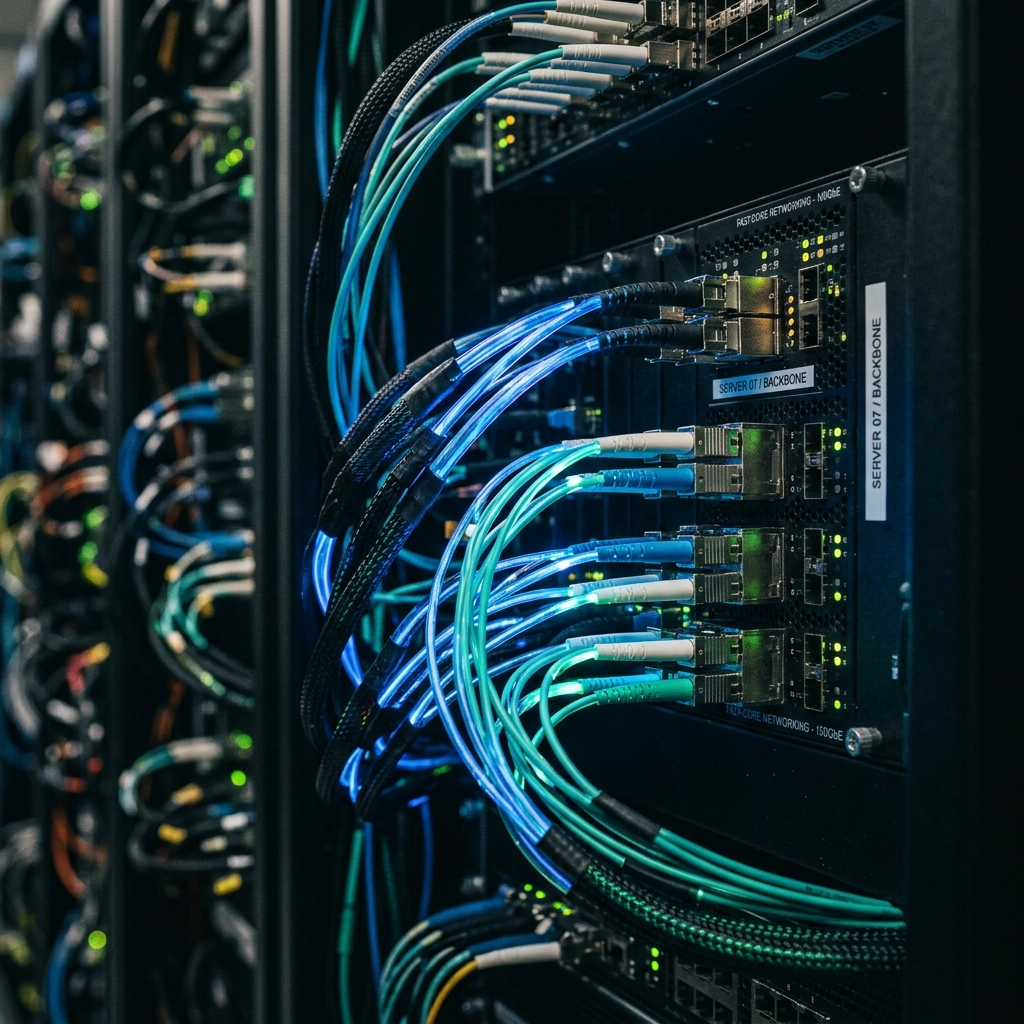
The pursuit of alpha in modern Forex trading is inextricably linked to the relentless optimization of execution speed. As institutional players and sophisticated retail quants increasingly deploy algorithmic strategies, the once aspirational goal of "low latency" has solidified into an operational imperative measured in microseconds, not milliseconds. For the discerning system trader eyeing the landscape of 2026, the choice of Cloud Virtual Private Server (VPS) is not merely a matter of convenience or cost; it is a fundamental architectural decision that directly impacts profitability, risk management, and the very viability of high-frequency and automated trading strategies. This deep-dive explores the critical infrastructure considerations and strategic choices for securing the definitive edge.
The Microstructure of Latency in Automated Trading
Latency in Forex transcends simple ping times. It is a complex interplay of network propagation delay, processing overhead at various hops, and the intrinsic speed of data transfer and computation. For automated trading, we dissect latency into several critical components:
- Market Data Ingress Latency: The time taken for price updates and order book changes to travel from the broker's matching engine or liquidity provider (LP) to your VPS. This is paramount for strategies relying on real-time information.
- Decision Processing Latency: The time your trading algorithm requires to analyze incoming data, execute its logic, and generate an order. This is CPU and RAM-dependent.
- Order Egress Latency: The time taken for your generated order to travel from your VPS back to the broker's matching engine.
- Broker Internal Processing Latency: The time the broker takes to receive, validate, and execute your order against their liquidity pool or forward to their LPs.
- Network Jitter: Variations in packet arrival times, which can disrupt the smooth flow of data and introduce unpredictability.
By 2026, the expectation for serious quants is that the combined network and processing latency from their VPS to the broker's gateway should ideally be in the single-digit millisecond range, and for ultra-high-frequency (UHF) strategies, even sub-millisecond figures for certain hops are critical. This necessitates a forensic examination of cloud VPS infrastructure.
Critical Infrastructure Components for Optimal Performance
The bedrock of a low-latency Forex trading setup lies in a meticulously chosen hardware and network stack. Generic VPS instances will not suffice; dedicated resources and cutting-edge technology are non-negotiable.
Processor (CPU) Architecture
While core count is often emphasized, for most single-threaded Forex EAs and many proprietary algorithms, raw single-core clock speed and CPU cache are more critical than having dozens of slower cores.
- Intel Xeon Scalable (e.g., Ice Lake, Sapphire Rapids, Emerald Rapids): These processors, prevalent in enterprise cloud environments, offer strong single-thread performance, generous L3 cache, and advanced instruction sets (like AVX-512) that can accelerate specific mathematical operations if your code is optimized for them.
- AMD EPYC (e.g., Genoa, Bergamo): AMD has significantly closed the performance gap, offering competitive single-thread performance and often superior core density, which can be beneficial for parallelized backtesting environments or managing multiple independent trading instances.
- Dedicated vs. Shared Cores: Always opt for instances guaranteeing dedicated CPU cores. Shared CPU environments introduce "noisy neighbour" issues, where other tenants' workloads can unpredictably steal CPU cycles, leading to critical latency spikes.
Memory (RAM) Configuration
Ample RAM is essential, but its type and speed also matter.
- DDR5 SDRAM: By 2026, DDR5 will be the standard, offering higher bandwidth and lower latency than DDR4. Ensure your chosen VPS provider's underlying hardware utilizes it.
- ECC Memory: Error-Correcting Code (ECC) RAM, while slightly slower, provides critical data integrity by detecting and correcting memory errors. This is crucial for mission-critical trading systems where even a single bit flip could lead to erroneous decisions.
- Sufficient Capacity: Allocate enough RAM to comfortably hold your trading platform (MT4/5, cTrader, custom applications), historical data, and operating system overhead without resorting to swap space (paging to disk), which is significantly slower.
Storage I/O Performance
Disk I/O might seem secondary for live trading, but it's critical for platform startup times, loading historical data, logging, and certain journal operations.
- NVMe SSDs: Non-Volatile Memory Express (NVMe) Solid State Drives are the absolute minimum standard. Their vastly superior IOPS (Input/Output Operations Per Second) and bandwidth compared to SATA SSDs or, God forbid, HDDs, ensure rapid data access.
- Dedicated Storage: Prefer instances that offer dedicated NVMe storage volumes or local NVMe storage over network-attached storage (NAS) solutions, which introduce additional network hops and potential bottlenecks.
- Provisioned IOPS: For very demanding applications, look for providers offering guaranteed provisioned IOPS, ensuring consistent disk performance regardless of other tenants.
Network Architecture and Connectivity
This is arguably the single most important factor for low-latency Forex trading.
- 10Gbps+ Uplinks: Your VPS should connect to the internet backbone via at least 10 Gigabit Ethernet (10GbE) uplinks. Future-proofing suggests providers offering 25GbE or 100GbE NICs are highly desirable.
- Direct Peering Agreements: Top-tier cloud providers invest heavily in direct peering with major Tier-1 ISPs and content delivery networks. This bypasses intermediary hops, reducing latency and increasing reliability.
- BGP Anycast: While not a direct user-configurable feature, providers leveraging BGP Anycast for their DNS or global load balancing can improve initial connection times and routing efficiency.
- Private Network Interconnects (PNI): For those connecting directly to specific financial data centers (e.g., Equinix LD4, NY4, TY3), look for providers offering PNI options or direct cross-connects. These are often dedicated hardware links, bypassing the public internet entirely for specific endpoints.
- Enhanced Networking Features (e.g., AWS ENA, Azure Accelerated Networking): These technologies use custom network adapters and virtualization techniques to bypass the host OS network stack, offering significantly higher packet rates, lower latency, and reduced CPU utilization for network processing.
Hypervisor Overhead and Virtualization Choices
The virtualization layer itself introduces a degree of latency and resource contention.
- KVM (Kernel-based Virtual Machine): Widely regarded as the industry standard for performance-critical cloud VPS, KVM offers near bare-metal performance. Its tight integration with the Linux kernel and efficient hardware passthrough capabilities minimize hypervisor overhead.
- Xen and VMware ESXi: While robust, older Xen-based or heavily managed VMware environments can sometimes introduce slightly higher latency or less efficient resource utilization compared to KVM, particularly if not configured optimally.
- Minimizing Overhead: Look for providers that use a lean host OS, optimize their hypervisor configuration for performance, and allow you to provision instances with dedicated resources rather than oversubscribing.
Geographic Proximity and Network Topologies
The speed of light remains an immutable constraint. Physical proximity to your broker's matching engine and liquidity providers is paramount.
- Strategic Data Center Locations: Identify the primary data center locations of your broker(s). For major Forex liquidity, these are typically:
- London (LD4/LD5 Equinix): Dominant for European and global Forex.
- New York/Secaucus (NY4/NY5 Equinix): Key for North American markets.
- Tokyo (TY3 Equinix): Central for Asian markets.
- Singapore (SG1/SG2 Equinix): Growing importance for APAC.
- Provider Footprint: Choose a cloud VPS provider with a data center in, or extremely close to, these financial hubs. A few milliseconds saved here can make a difference.
- Network Route Optimization: Utilize tools like
mtr(My Traceroute) andtracerouteto analyze the actual network path your packets take to your broker's IP. Look for routes with minimal hops and consistently low latency. Some providers offer "premium" network tiers that prioritize traffic and utilize optimized routing tables.
Understanding and Mitigating the "Last Mile" Challenge
Even with an optimally placed VPS, the "last mile" – the connection from your chosen cloud provider's data center to the broker's specific racks within a colocation facility – can be a source of unpredictable latency.
- Prop Firm Realities: Professional proprietary trading firms often co-locate their servers directly within the same data centers as the exchanges and major brokers, utilizing cross-connects for sub-millisecond communication. A cloud VPS aims to get as close to this as possible without the full cost and complexity of colocation.
- Virtual Private Cloud (VPC) and Direct Connect: Larger cloud providers offer VPCs for network isolation and "Direct Connect" or "Interconnect" services, which are dedicated, high-bandwidth connections from their network to specific colocation facilities or enterprise networks. While often overkill for a single VPS, these illustrate the dedication to direct connectivity.
- API Latency: Beyond network latency, consider the latency of your broker's API (e.g., FIX API, proprietary REST/WebSocket APIs). Even a fast network cannot compensate for a slow or inefficient API implementation.
The African/Nigerian Context: Specific Considerations
Trading from or within regions like Africa, particularly Nigeria, introduces unique challenges and opportunities that must be addressed by advanced traders.
- Internet Backbone Reliability: While submarine cables (e.g., SAT-3, WACS, MainOne, Equiano) have vastly improved connectivity, internal infrastructure reliability (last-mile fiber, local ISP peering) can vary significantly. This impacts overall latency to international financial hubs.
- Power Stability: Local data centers in many African nations face challenges with consistent power supply. Cloud providers operating within Africa must demonstrate robust redundant power systems (UPS, generators) and cooling.
- Data Center Quality: The quality and accreditation of local data centers (e.g., Uptime Institute Tier certifications) are critical. While major global cloud players (AWS, Azure, GCP) have regions or edge locations in South Africa, and are expanding, dedicated points-of-presence for ultra-low-latency financial connectivity closer to Nigeria are still nascent compared to London or New York.
- Connectivity to International Hubs: For Nigerian traders targeting global Forex markets, the primary latency bottleneck will be the physical distance and network hops to data centers in Europe (London) or the US. Choosing a cloud VPS geographically closer to London (e.g., in Germany, France, or even Ireland) with excellent transatlantic fiber connectivity can sometimes yield better latency than a VPS physically in Nigeria trying to reach London via a less optimal route.
- Compliance and Data Residency (NDPR): If your trading operations or data storage fall under local regulations like Nigeria's Data Protection Regulation (NDPR), you must ensure your chosen cloud provider's policies and data center locations comply with data residency requirements, if applicable. For pure execution, this is less of a concern than for client data management.
- Emerging Local Markets: As local Forex brokerage ecosystems mature in Africa, the demand for low-latency VPS within the continent will grow, necessitating local data centers with direct peering to these brokers. For 2026, this is a developing area.
Selecting Your Cloud VPS: Beyond the Brochure
Identifying the "best" provider is subjective, depending on your broker's location and specific strategy. However, top-tier cloud providers consistently offer infrastructure capable of meeting stringent latency requirements.
Leading Cloud VPS Contenders for 2026:
- Amazon Web Services (AWS) - EC2 Instances:
- Strengths: Unparalleled global footprint, vast range of instance types (e.g., C6i, C7g for compute-intensive tasks), Elastic Network Adapter (ENA) for enhanced networking, AWS Global Accelerator for optimizing routes, robust Direct Connect options.
- Considerations: Can be complex and expensive to configure optimally; egress costs can accumulate.
- Google Cloud Platform (GCP) - Compute Engine:
- Strengths: Google's "Premium Tier" global network is renowned for its low latency and extensive direct peering, custom machine types for precise resource allocation, strong global presence.
- Considerations: Interface and terminology can have a learning curve; pricing can be complex.
- Microsoft Azure - Virtual Machines:
- Strengths: Strong enterprise focus, "Accelerated Networking" for improved VM network performance, extensive global data center network, good integration with Windows Server environments.
- Considerations: Pricing can be less transparent; network performance might be slightly behind GCP in some comparisons.
- Vultr High Frequency Compute:
- Strengths: Often uses latest-generation CPUs with high clock speeds, offers NVMe storage, competitive pricing, good global data center distribution including strategic locations.
- Considerations: While excellent value, might not match the absolute lowest latency network routes of the "Big 3" for extremely niche scenarios.
- OVHcloud - VPS/Dedicated Servers:
- Strengths: Strong focus on raw performance, highly competitive pricing, extensive global network capacity, good for dedicated server options if VPS limits become an issue.
- Considerations: Support might be less immediate than premium providers; network topology can be less granular than AWS/GCP.
- Hetzner Cloud:
- Strengths: Exceptional price-to-performance ratio, powerful underlying hardware (often AMD EPYC), fast NVMe storage.
- Considerations: Data centers primarily in Europe (Germany, Finland) with one US location; excellent for EU-centric trading but might have higher latency for other regions.
Key Selection Criteria:
- Location, Location, Location: Prioritize providers with data centers closest to your broker's matching engine.
- Dedicated Resources: Ensure dedicated CPU cores and guaranteed RAM.
- NVMe Storage: Absolutely essential for fast I/O.
- Network Performance: Inquire about 10GbE+ uplinks, direct peering, and optional enhanced networking features. Request network benchmarks or traceroutes to key financial hubs.
- SLA Guarantees: Look for strong SLAs on network uptime and latency.
- Technical Support: Knowledgeable and responsive support is crucial when microsecond delays mean missed opportunities.
- Scalability: The ability to scale resources (up or down) as your strategy evolves.
Concluding Thoughts: The Relentless Pursuit of Speed
By 2026, the competitive landscape of automated Forex trading will be even more ruthless. The expectation for professional quants and system traders will not merely be "fast," but "predictably ultra-fast." A meticulously selected Cloud VPS, underpinned by a deep understanding of its infrastructure, network topology, and virtualization nuances, is the cornerstone of this predictability. It is an ongoing optimization challenge, requiring continuous monitoring, benchmarking, and adaptation. The ultimate goal is to minimize every measurable increment of latency, transforming potential slippage into consistent alpha, and ensuring that your automated execution is not just competitive, but unequivocally superior.
Continue Reading